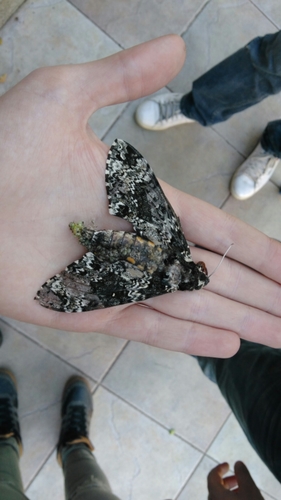
Carolina Sphinx Manduca sexta
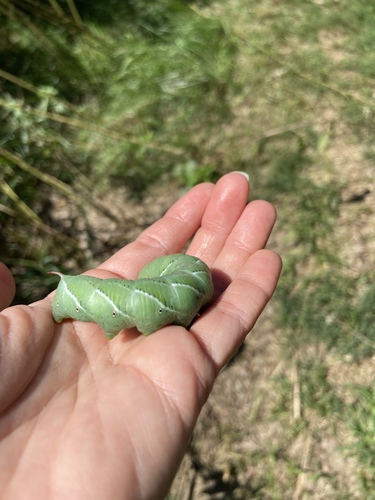
(c) Elissa Totin, some rights reserved (CC BY)
This moth has a second career as one of science's most important research animals. Its large caterpillar has been used for decades to study neuroscience, flight mechanics, chemical sensing, and immune responses — and its precise hovering flight has even inspired engineers designing micro-drones. Not many insects can claim influence over both biology and robotics.
The caterpillar, known as the tobacco hornworm, is a growth record-holder: it can multiply its body weight roughly 10,000 times between hatching and pupation, one of the fastest growth rates of any caterpillar. Despite looking intimidating — finger-sized, bright green, with a prominent red horn — that horn is completely harmless. First described by Carl Linnaeus in 1763, this species has fascinated scientists for over 250 years and keeps delivering new discoveries.
Think you can identify this one in the wild?
Play Now