Hebrew Moth Polygrammate hebraeicum
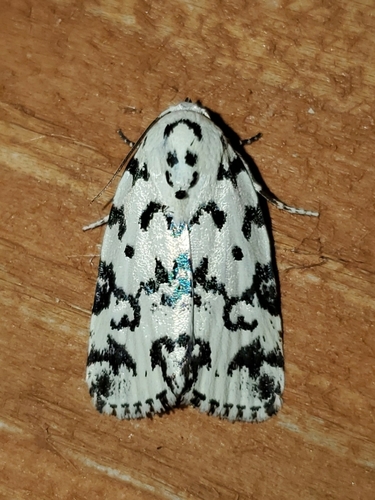
(c) Laura Gaudette, some rights reserved (CC BY)
Take one look at this moth's forewings and the common name is immediately obvious — the intricate black lines and squiggles on pale wings look strikingly like Hebrew script, a resemblance so convincing that it has fascinated naturalists since the species was first described in 1818. It's one of the more charmingly named moths in North America, and the "text" across its wings is genuinely distinctive in the field. The moth flies in summer and comes readily to lights at night.
Its caterpillars feed on a range of forest trees including oaks, maples, and ashes, making it a widespread inhabitant of the eastern woodland belt from Ontario south to Florida and west into Texas. Keep an eye on the porch light — this is one worth a second look.
Think you can identify this one in the wild?
Play Now