Rosy Footman Miltochrista miniata
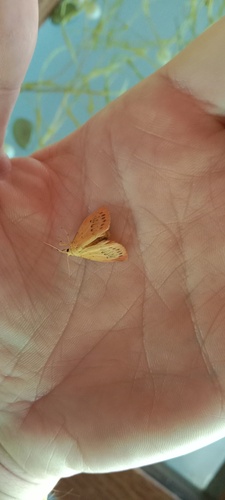
(c) Oleksii Vasyliuk, some rights reserved (CC BY)
The name comes from a delightfully old-fashioned image — these moths fold their wings so tightly along their bodies that they resemble a liveried servant standing at attention. With warm orange forewings splashed with bold black spots, the look is already striking, but it's the larvae that are truly unusual: rather than munching on leaves, the caterpillars feed on the algae and lichens that coat tree bark — a diet almost unheard of among moths.
Despite the delicate appearance, this species has a remarkable range stretching from Western Europe all the way to Japan, tolerating everything from English woodland edges to Siberian forests. It was first described in 1771 by Johann Reinhold Forster — the very same naturalist who sailed on Captain Cook's second voyage around the world. Not bad company for a tiny orange moth.
Think you can identify this one in the wild?
Play Now